
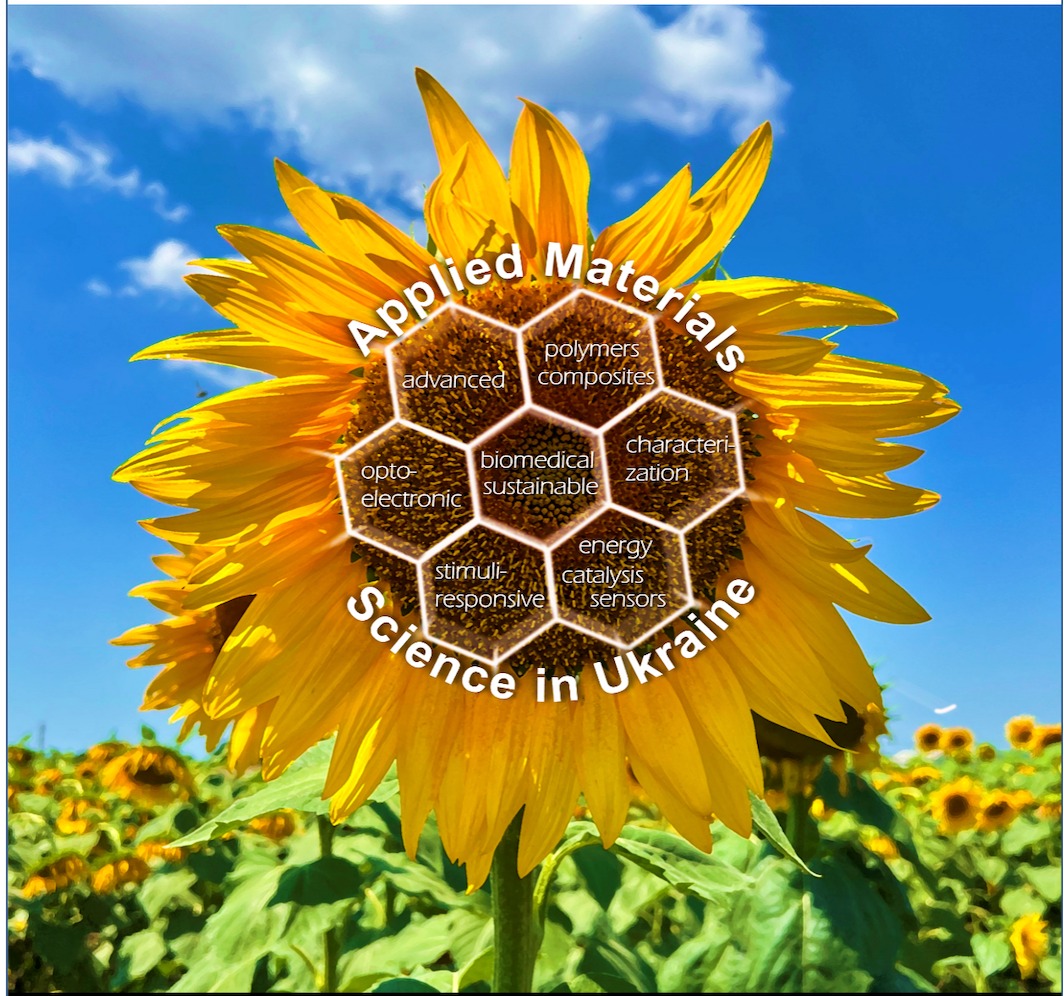
A special issue titled “Science in Ukraine: Advances in Applied Materials” has been published in one of the leading journals of the American Chemical Society, ACS Applied Materials & Interfaces. This is not merely another collection of scientific articles, but an attempt to document the state of Ukrainian science under conditions of full-scale war.
The journal specializes in research at the intersection of materials science, chemistry, engineering, and biology — precisely the fields that shape applied technologies. Ukrainian science has historically been strong in these areas, from metallurgy and electric welding to developments for the aerospace sector and semiconductor technologies.
The full-scale invasion has significantly changed the conditions under which researchers work. Part of the infrastructure has been destroyed or damaged, thousands of scientists have gone abroad, while others have joined the defense efforts or have been forced to suspend their work. Those who remain continue working under constant uncertainty — between air raid sirens, power outages, and limited access to equipment.
At the same time, the international scientific community responded relatively quickly. Universities and research centers opened access to laboratories, special support programs were introduced, and collaboration with Ukrainian scientists became more visible. It is at the intersection of these processes—internal resilience and external support — that this special issue has taken shape.
The issue includes 22 articles selected from several dozen submitted works. Around 120 researchers from Ukrainian scientific institutions and universities took part in the project. A key requirement was that the authors had to be working in Ukraine during the preparation of the publications. This effectively documents not only the scientific results, but also the very fact that research continues in a country at war.
Some of the studies were carried out in collaboration with foreign partners, including those from the United States and European countries. In this sense, the special issue also serves as evidence of the integration of Ukrainian science into the global context, which, despite the war, has not only continued but in some cases has even accelerated.
Among the invited editors are Ukrainian scientists, including the Director of the Institute of Functional Materials Chemistry of the SSI, Academician of the NAS of Ukraine Valentyn Chebanov. According to him, the key task was not only to ensure a high scientific standard of the publications, but also to demonstrate that the Ukrainian research system continues to function.
“It is about documenting the obvious: even under current conditions, Ukraine retains an environment capable of producing world-class results,” he notes.
Among the published works is a study by our researchers and partners (Viktoriia Lipson, Olena Bezugla, Svetlana Dzhoraeva, Yanina Kutasevych, Anna Liapunova, Ihor Zinchenko, Volodymyr Vakula, Valentyn Chebanov, and Mykola Lyapunov) devoted to enhancing the antibacterial effectiveness of medicinal compounds, which may have practical significance for medicine.
The special issue is available at the following link: https://pubs.acs.org/page/aamick/vsi/science-in-ukraine?ref=vi_collecti…