Junior Researcher at the Institute of Functional Materials Chemistry of the SSI, PhD Daria Miasnikova, completed a short-term scientific research stay at the Technical University of Munich (TUM).
The research-stay took place within the European research network COST Action EU4MOFs - an international community that brings together researchers working with metal-organic frameworks (MOFs). The Short-Term Scientific Mission (STSM) within the European research network COST Action EU4MOFs was an important milestone in developing international cooperation and sharing advanced scientific expertise.
For Daria Miasnikova, this was not only an opportunity to work in another research laboratory, but also to explore a practical question that is important for the further application of such materials: how MOF materials behave after use and whether they can be regenerated for repeated use.
The research stay took place at the Department of Inorganic and Metal-Organic Chemistry under the supervision of Dr. Romy Ettlinger. Her research group studies porous composite materials for the recovery of valuable resources and water purification. One of the group’s research areas is the development and functionalization of MOF-based filtration systems.
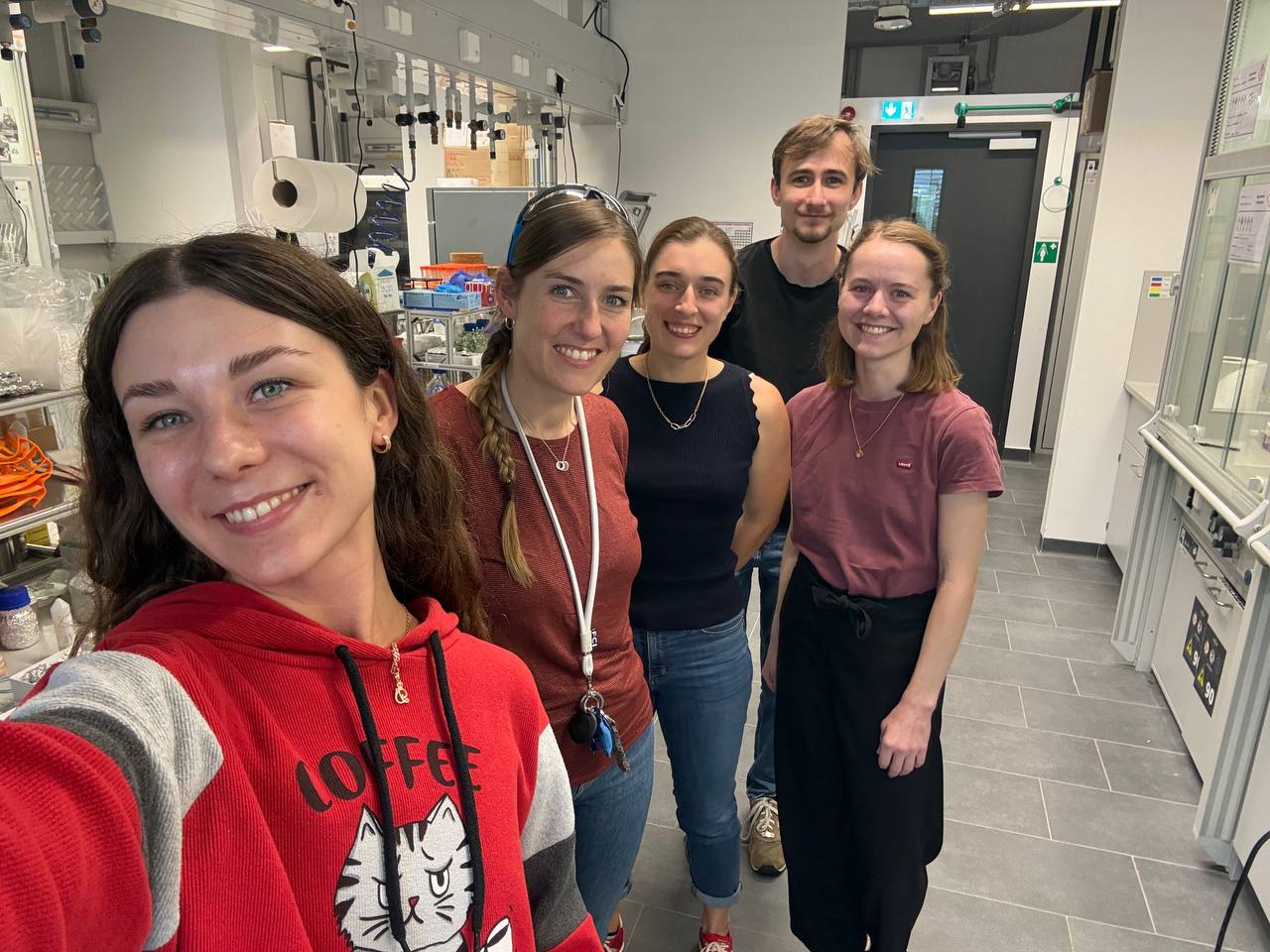
The stability, degradation, and regeneration of MOF materials became the main focus of Daria Miasnikova’s work during the STSM. She studied how the properties of the materials change during use and what is required to restore them.
This is important not only from the perspective of fundamental science. If a porous material can be used repeatedly without a significant loss of its functional properties, this creates greater opportunities for developing efficient sorbents and filtration systems and aligns with the principles of “green” chemistry and the circular economy.
“For me, this research stay was an opportunity not only to deepen my knowledge and practical skills in working with MOF materials, but also to become part of the international scientific community. The exchange of experience with Technical University of Munich researchers and the opportunity to work with advanced approaches to studying the stability and regeneration of porous materials were particularly valuable,” said Daria Miasnikova.
The participation of our young scientists in international programs is very important, as it provides an opportunity to represent Ukrainian research internationally and to apply new approaches, methodologies, and professional connections in their work.